9 Leadership Lessons From 2020, Per The World Economic Forum

The upheavals of 2020, triggered mostly but not only by the Covid-19 pandemic and the economic shutdown required to try to stop the spread of it, forced leaders to see their places in the economy and their organizations very differently, and to respond. Fast. In this new reality, almost none of the existing policies and practices applied, because they were too slow, irrelevant or ineffective. This tumultuous year also taught us of all – and especially the world’s leaders across sectors many of whom gathered virtually for the WEF 2021 for the first time – many lessons that we will need to both eliminate covid-19 and to emerge from it stronger and better. Here are 9 lessons leaders learned from 2020 and Covid-19, so far, as reflected in WEF 2021:

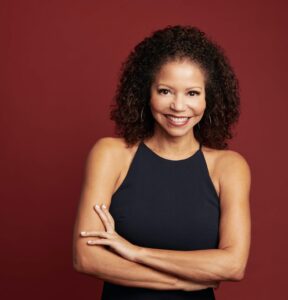
Water Pollution & Justice – Actress & Activist Gloria Reuben

“When you talk about pollution of the waterways, that goes very much to industries, like fossil fuels of course, like factory farming, like businesses or corporations that are allowed to just dump their waste or by-product of making things, manufacturing, into the waterways, when there’s no regulation, then clearly, then people can just do what they want to without any consequences.” Gloria Reuben on Green Connections Radio podcast. .One organization has been holding polluters accountable for decades — the Waterkeepers Alliance — and now they have a new leader who brings starpower as well as commitment to advocacy and justice. Gloria Reuben, actress and environmental activist is their new President. Listen to Gloria explain their impact in this engaging conversation with Green Connections Radio host Joan Michelson, commemorating Black history Month.

Eco-Oyster Farming – Kay Olin, Panacea Oyster Cooperative

You can still get sustainable seafood during a pandemic, and Green Connections Radio previous guest Kay Olin and her Estuary Oysters proves businesses can continue to grow. They are now a supplier to all Whole Foods in Florida (where Estuary is located), with plans to expand. Listen to this interview from a couple of years ago when Kay explained to GCR host Joan Michelson how they farm sustainable oysters and build the economy at the same time.

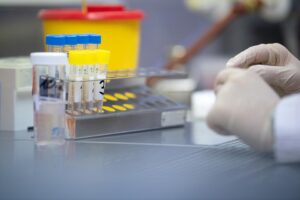
Non-Toxic Disinfecting COVID19 – Rayne Guest, R-Water

“For healthcare grade disinfection, the EPA has certain requirements….that you test against, and those lab reports, we showed 100% kill in one minute, which is actually really impressive, because most toxic products they use in hospitals for disinfectants take 10 minutes, have to be reapplied multiple times to stay wet for 10 minutes, and only have a 95% kill rate and still be approved by the EPA for healthcare grade disinfection.” Rayne Guest on Green Connections Radio podcast How do you know your office or school or facility is truly free of COVID-19?  There are no 100% guarantees, but learn about an environmentally-friendly disinfectant that the EPA says is 100% effective in one minute with Rayne Guest, CEO and Founder of R-Water, on Green Connections Radio podcast with host Joan Michelson.

Ecopsychology? A Decision-Making Model – Tabitha Jayne, Coaching With Nature

Could combining how nature functions (such as how a rose easily blooms), with the systems in professional coaching help us achieve more of our potential? Tabitha Jayne says it worked for her after personal tragedy, so she created the “Coaching With Nature” program to help others too. Listen to Tabi describe this novel coaching program and why she says it works, complete with an understanding of “ecopsychology,” in this enlightening interview on Green Connections Radio podcast with host Joan Michelson.

Lessons From Coronavirus For Future Climate Change Public Health Crises

Climate scientists have been warning us that, “Climate change carries a threat to human health and health care systems in the coming decades,” as ATS journal (of The American Thoracic Society) reported. I am not saying – and have not heard – that there is any association between the current novel coronavirus and climate change.  However, this outbreak and how we manage it does provide lessons for how we ought to prepare for and manage any potential increase in infectious diseases that scientists predict will come with the extreme weather events, droughts and other environmental ecosystem changes brought on by climate change.

The Press, Climate & Diversity – Wanda Lloyd, Author of “Coming Full Circle: From Jim Crow to Journalism,” Former News Executive

“There are environmental issues that are very important to people on a local level…(but they are) being covered (by the local news media) based on everyday issues in local communities… because it affects tourism, it affects the economy, it affects a lot of things, not to mention the places that we live…(and) because it affects their taxes.”Wanda Lloyd on Green Connections Radio podcast – Wanda Smalls Lloyd former senior editor at USA Today and at local newspapers, and a former Washington Post executive, and the author of a new book – “Coming Full Circle: From Jim Crow to Journalism.” She provides valuable career advice to

Sea-Level Rise “Detective” – Andrea Dutton, MacArthur “Genius” Winner 2019

“A lot of these times we see these problems as having binary solutions, it’s either we stay and defend…or we just pick up and leave, but there’s a lot of space in between.” Andrea Dutton on Green Connections Radio
Geologist Dr. Andrea Dutton was awarded the coveted MacArthur “Genius” award recently for her work in finding an innovative way to predict sea-level rise and identify the options for managing it. Listen to her explain her innovative approach – and how that approach might be used in other context too – to Green Connections Radio host Joan Michelson in this inspiring and fascinating interview.

Why Place Matters – Stacy Jupiter, MacArthur “Genius” Winner 2019

As world leaders and climate leaders, scientists and activists gather to address solutions to the climate crisis, Dr. Stacy Jupiter has a novel perspective on what communities need to address in those climate resilience plans – and in driving change.  She just won a MacArthur “Genius” award for it. Listen to Stacy explain to Green Connections Radio host Joan Michelson why our sense of a place and its culture are just as vital to our well-being as clean water and food, especially in many countries like Melanesia, where she is currently working.

Adapting to Climate Change – Beth Gibbons, Adaptation Professionals

Local leaders are managing the very real devastation to their communities and economies caused by extreme weather events, while much-needed resources from the federal government are tied up in political wrangling over whether climate change is real.  
The people on the ground dealing with these effects are called “adaptation professionals,” so Green Connections Radio host Joan Michelson went to them to find out what’s happening on the ground. Listen to her startling conversation with Beth Gibbons, Executive Director of Adaptation Professionals for great insights on all sides of this life-threatening, economy-threatening, polarizing issue.